'%20stroke='%232A3441'%20stroke-width='1'/%3e%3c!--%20soft%20glow%20halo%20behind%20bolt%20--%3e%3cpath%20d='M37%208%20L19%2033%20H29%20L25%2056%20L45%2030%20H35%20L39%208%20Z'%20fill='%2300D26A'%20fill-opacity='0.18'%20transform='translate(-1%200)'%20filter='url(%23boltGlow)'/%3e%3c!--%20main%20precision%20bolt%20--%3e%3cpath%20d='M37%208%20L19%2033%20H29%20L25%2056%20L45%2030%20H35%20L39%208%20Z'%20fill='url(%23boltGrad)'%20stroke='%230E1620'%20stroke-width='0.8'%20stroke-linejoin='round'%20stroke-linecap='round'/%3e%3c!--%20inner%20left%20highlight%20--%3e%3cpath%20d='M37%208%20L21%2032%20H27.5%20L33.5%2016%20Z'%20fill='url(%23boltShine)'/%3e%3c!--%20crisp%20top%20edge%20--%3e%3cpath%20d='M37%208%20L33%2022'%20stroke='%23FFFFFF'%20stroke-opacity='0.35'%20stroke-width='0.8'%20stroke-linecap='round'/%3e%3c/svg%3e)
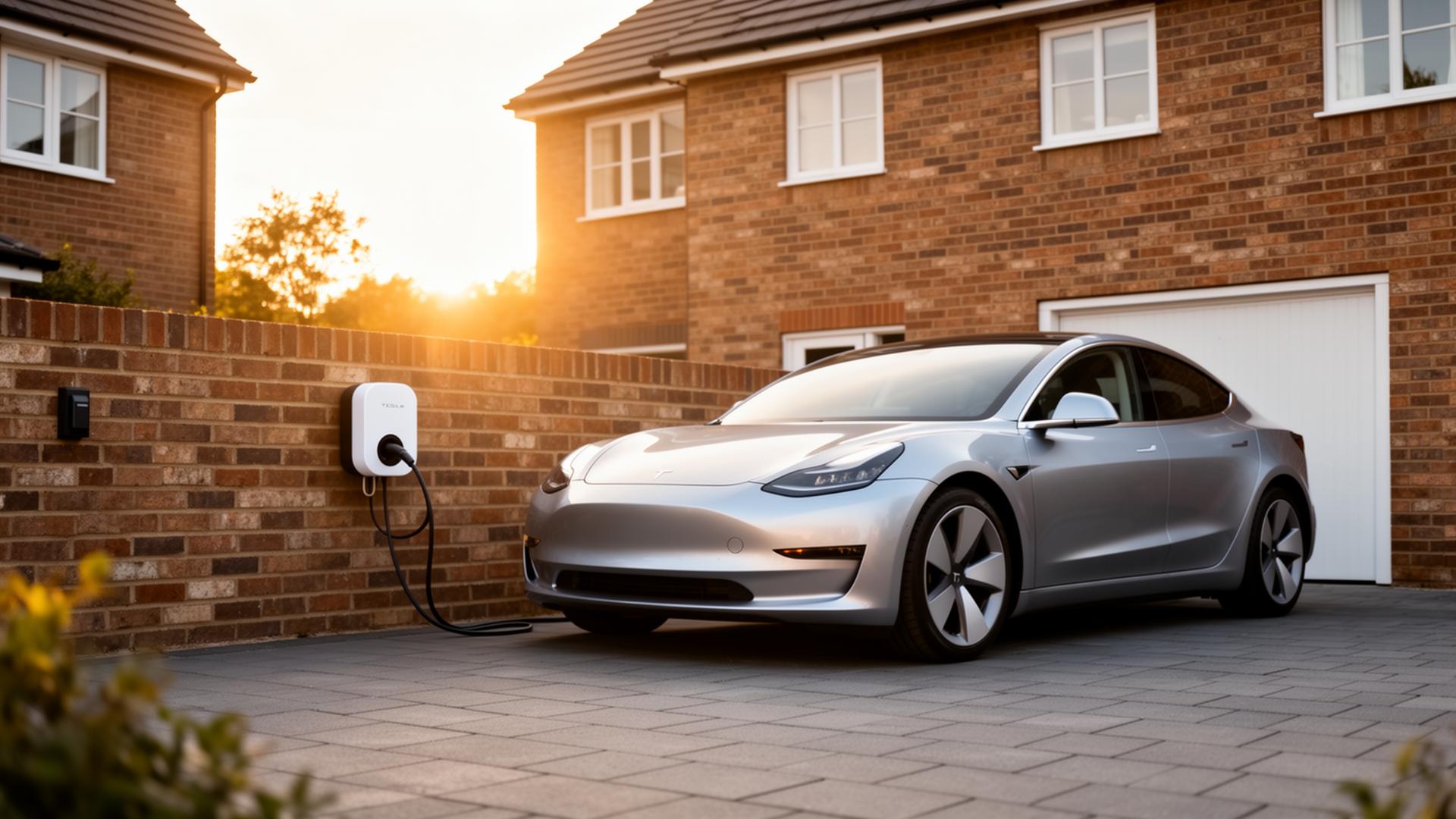
Electric vehicle home charging installation with PluginPros
Looking for an easy, quick and smart EV charging solution for your home? You've come to the right place. Whether you've already got an electric car, or you're new to the idea, we've got everything you need to help you make your next step towards a greener future.
We partner with some of the biggest EV charging manufacturers in the world to make sure we bring you the best electric car chargers out there, including Rolec, Ohme and Tesla. Our standard install includes everything you need — so beware of those that add extras that are needed for a safe install. Plus, you can spread the cost of your charger and installation over monthly interest-free payments.
Why PluginPros for EV charging?
Qualified electricians
Every install is carried out by qualified electricians with years of experience in EV charge points and home electrical systems.
Warranty protection
The warranty is effective from the installation date. For your charge point, the manufacturer warranty applies. For your installation, we provide a 12 month warranty for the workmanship — fees may apply after this period.
Transparent fixed pricing
The price you see includes the charger, standard installation, all certification and VAT. No hidden surcharges — any extras identified during the survey are agreed in writing before work begins.
Friendly team always on-hand
Your local PluginPros team is never far away. We're always on hand to offer EV charging support over the phone, or come to your home to check what's going on.
Beginner's Guide to EV Charging
New to EV charging? Here's everything you need to know — straight on this page, no redirects.
What is a home charger? A wall-mounted unit that delivers AC electricity to your car's onboard charger at up to 7.4 kW (single phase) or 22 kW (three phase). It replaces the slow 3-pin emergency cable that comes with your car.
How long does charging take? A typical 60 kWh EV (around 220 miles) charges from 20% to 100% in roughly 7 hours on a 7 kW charger — perfectly suited to overnight charging on a cheap off-peak tariff.
What does it cost to run? On Octopus Intelligent (7p/kWh off-peak) a full 60 kWh charge costs around £4.20 — about 2p per mile vs 14–18p per mile on petrol.
Do I need to upgrade my supply? Almost never — most UK homes have a 60 A or 100 A main fuse, easily enough for a 7 kW charger alongside normal household load. We submit the DNO notification on your behalf either way.
Smart features. All chargers we install are smart-tariff ready — automatic load balancing with your house, surplus solar export, scheduled charging, lock-out for kids/visitors, and remote firmware updates so the unit improves over time.
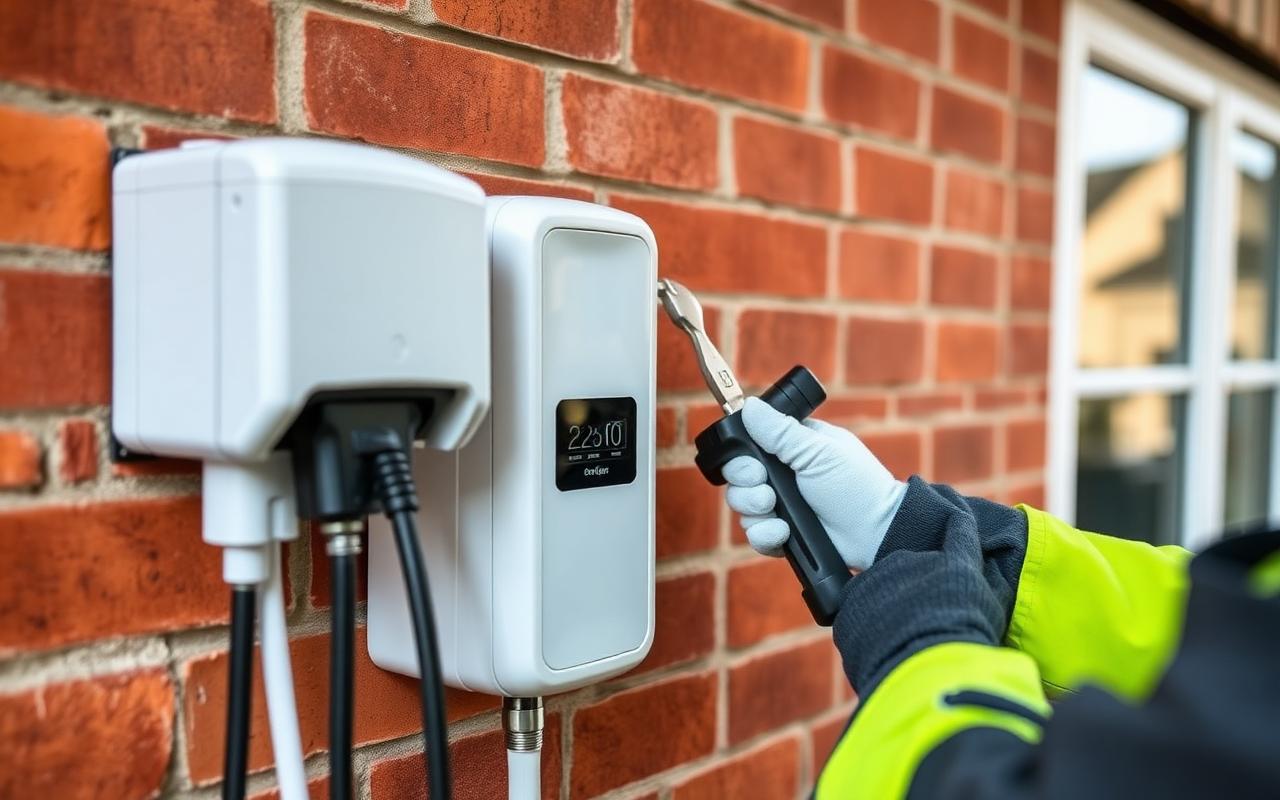
Installing a home EV charge point with PluginPros
Give us a call and we'll chat through your EV needs and requirements so we can advise on the best EV charger for you — unless you already have one in mind.
We'll then send you a mobile survey where you can add photos of your property and electrical setup. We can also arrange a video call or site visit, if needed.
We'll provide a quote for the work required based on the survey and the charger you'd like installed.
Once the quote has been agreed, a provisional date will be booked and a deposit may be taken at this stage.
We'll submit an application to your Distribution Network Provider. Once permission has been agreed, we'll arrange an installation date.
We'll complete your installation, make sure everything's working as it should, and send an invoice through. We'll also provide an Electrical Installation Certificate.
Frequently asked questions
How long does it take to charge an electric vehicle?
EV charging speeds depend on the type of charger used. A home charger typically charges an EV in about 4 to 8 hours, so many EV owners charge their vehicles overnight. Public rapid charging stations can charge an EV in around 30 minutes.
How much does it cost to charge an electric vehicle?
A full 200 mile range charge at home costs on average around £15, whereas charging at a public rapid charging station, which provides around 90 miles of range, costs approximately £20.
Is installation included in the cost of the EV chargers?
The prices against our EV chargers include the cost of installation and the charger itself — apart from the Tesla Wall Connector which just includes the price of installation. Our standard installation starts from £625 inc VAT. For an accurate quote, we'll send you a link to a remote site survey.
Can I pay for my charger online?
Yes — you can pay securely online at checkout, or request a callback and arrange payment after the site survey by card terminal on the day of installation or by bank transfer.
What criteria do I need to install an EV charger at home?
Currently, we can only install a home EV charger on private land, which includes home driveways. Permission isn't required to install a wall-mounted EV charger on owned property, but if you're renting you'll need written consent from the owner prior to installation.
What EV charging aftercare and maintenance do you offer?
We can supply, install, and continue to maintain your unit. Our aftercare package includes site service inspections, annual safety reporting of the unit, and more.
Helpful EV charging guides
Tap any guide to read it in full — no redirects.
Beginner's Guide to EV Charging
Three speeds matter at home: slow trickle (3 kW from a 3-pin plug — only for emergencies), fast (7 kW from a dedicated wall charger — the standard for UK homes, charges most EVs from empty in 6–8 hours overnight), and rapid public 50 kW+ for top-ups on long journeys. A 7 kW home charger draws around 30 A — almost every UK home with a 60 A or 100 A main fuse can support one without a supply upgrade.
What to consider when buying an EV charger
Tethered (cable attached) is more convenient day to day; untethered (socket only) is tidier and lets you upgrade the cable separately. Look for a Mode 3 Type 2 charger with built-in PEN fault protection (mandatory under UK regs), OCPP smart connectivity, and an app that integrates with your tariff (Octopus Intelligent, Intelligent Go, EDF GoElectric). Solar PV owners should pick a charger with surplus solar export tracking (Zappi, Hypervolt, Indra Smart Pro).
Why make the transition to EV?
On a typical 7p/kWh overnight EV tariff, charging at home costs roughly 2p per mile vs 14–18p for petrol — annual savings of £900–£1,500 for an average 8,000-mile driver. EVs have around a third of the moving parts of an ICE car, so service costs are dramatically lower. Add zero VED for now, exemption from London's ULEZ and Congestion Charge, and a 2% Benefit-in-Kind rate on company cars.
Cost of EVs against Petrol and Diesel
Up-front: a new EV is still around 15–20% more expensive than the equivalent petrol model, but the gap closes every year and the used market is now flush with 3–4 year old EVs at competitive prices. Total cost of ownership over 4 years almost always favours the EV thanks to fuel and servicing — typically £4,000–£7,000 cheaper for a private driver, more for a company-car driver.